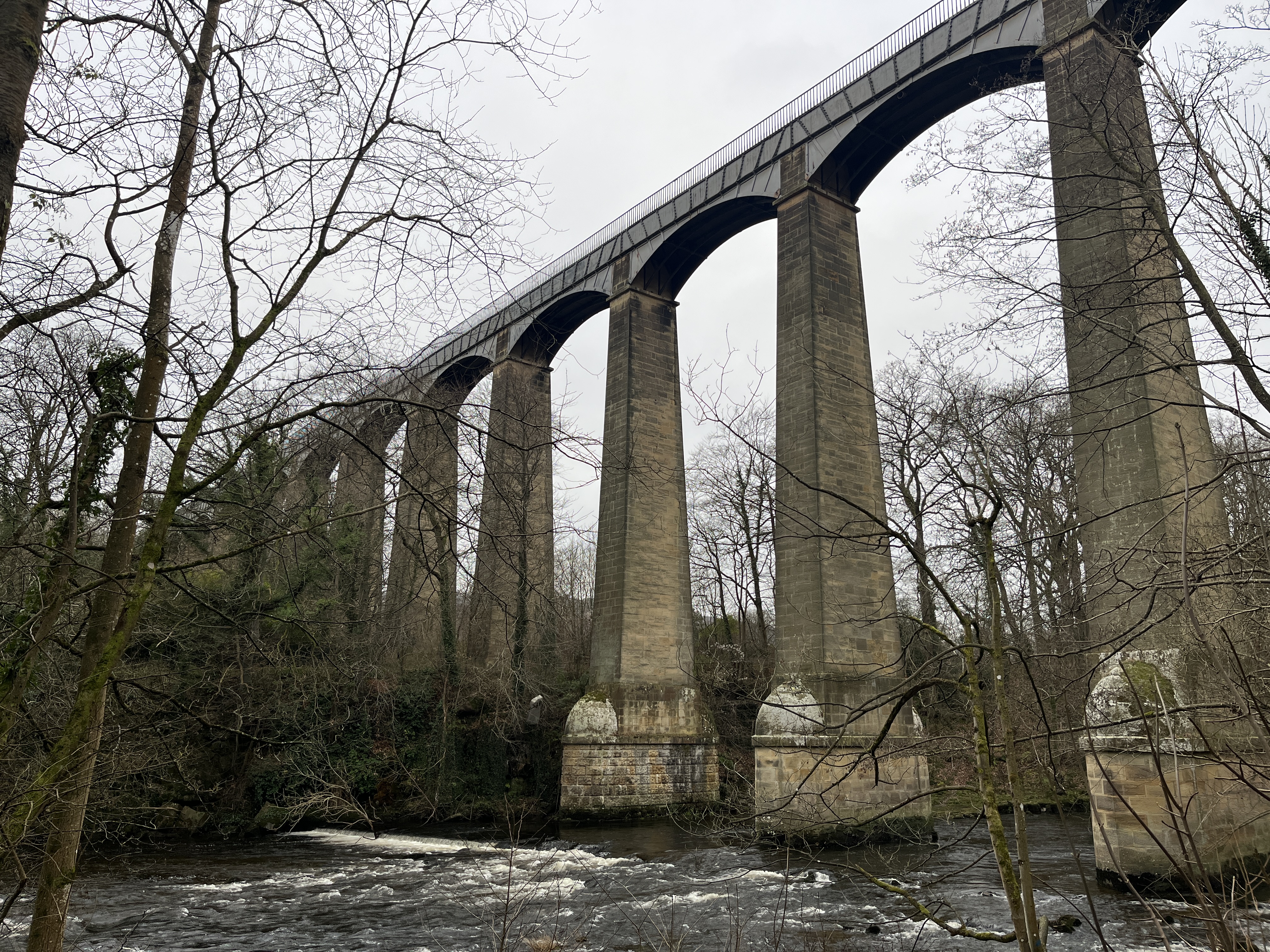
The Pontcysyllte Aqueduct is one of Britain’s most remarkable feats of engineering and a defining landmark of the Llangollen Canal in north-east Wales. Spanning the River Dee valley between the villages of Trevor and Froncysyllte, the aqueduct carries narrowboats high above the landscape, offering breathtaking views of the surrounding countryside.
Completed in 1805, the aqueduct was designed by renowned engineers Thomas Telford and William Jessop during the height of the Industrial Revolution. Built to support the growing canal network that powered Britain’s industries, Pontcysyllte was revolutionary in both scale and design. At over 300 metres long and rising approximately 38 metres above the river below, it remains the longest and highest navigable canal aqueduct in Britain.
The structure consists of a cast-iron trough supported by 18 slender stone piers. This innovative use of iron was cutting-edge at the time and demonstrated Telford’s confidence in new materials. On one side of the aqueduct is a narrow footpath with a protective railing, while the other side is open, creating a dramatic experience for walkers and boaters alike.
Despite its age, Pontcysyllte Aqueduct is still fully operational today and forms a vital part of the Llangollen Canal. It attracts hundreds of thousands of visitors each year, including canal boaters, cyclists, and tourists drawn by its history and stunning setting.
In recognition of its global significance, the Pontcysyllte Aqueduct and Canal were granted UNESCO World Heritage Site status in 2009. This designation celebrates not only the aqueduct itself but also its influence on civil engineering worldwide.
More than two centuries after its completion, Pontcysyllte Aqueduct stands as a symbol of human ingenuity, blending beauty, functionality, and ambition in a structure that continues to inspire awe.


