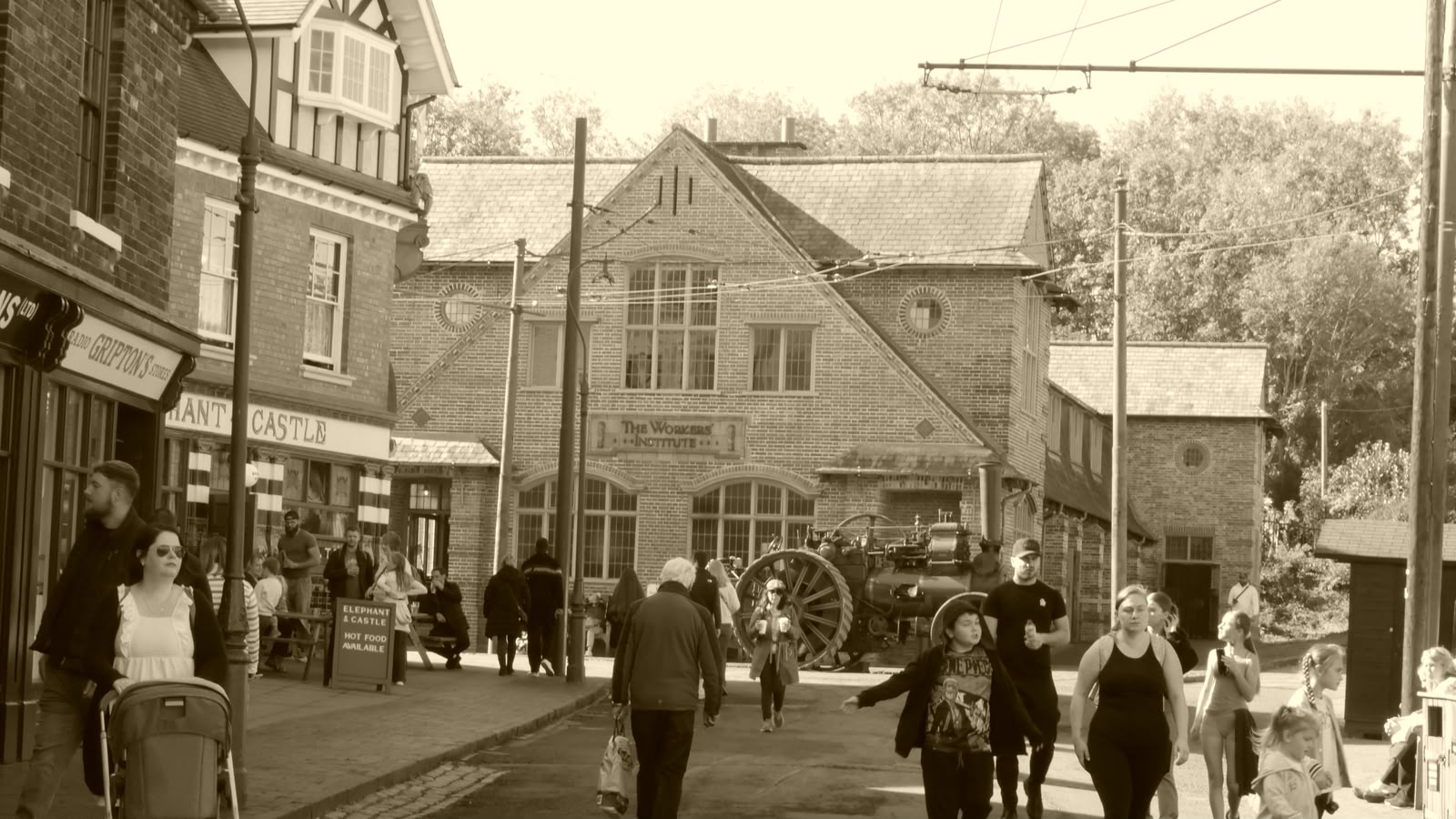
There are some places you visit where you simply look around, take a few photographs and move on. Then there are places that genuinely transport you somewhere else.
My recent visit to the Black Country Living Museum was definitely one of the latter.
From the moment I arrived, I knew I was in for something rather special. This isn’t simply a museum where you walk around looking at objects behind glass. It is an immersive journey into the past, bringing the sights, sounds, smells, people and stories of the Black Country to life in a way that makes history feel incredibly real.
And as someone who loves exploring the UK’s heritage, travelling around and discovering the stories behind the places I visit, I thoroughly enjoyed every minute.
Stepping back in time
The Black Country Living Museum, located in Dudley, is an extraordinary open-air museum that recreates life in the Black Country during the late 19th and early 20th centuries.
Walking through the site feels like stepping through a time machine.
Traditional buildings, shops, houses, industrial workplaces and streets have been brought together to create a living picture of what the area would have looked and felt like generations ago.
What I particularly enjoyed was the fact that the experience isn’t just about looking at old buildings. There are people bringing the stories to life, demonstrating traditional skills and helping visitors understand what everyday life was actually like.
You can imagine the streets bustling with people, hear the sounds of industry and begin to appreciate just how different life was for previous generations.
It makes you stop and think.
Today we live in a world of smartphones, fast internet, modern cars and convenience. The Black Country Living Museum provides a fascinating reminder of how quickly life has changed and how much our towns, industries and communities have evolved.

Catching up with the Historic Narrowboat Club
One of the highlights of my visit was catching up with the Historic Narrowboat Club, who had arranged a meet as part of the weekend.
For me, this added another fantastic dimension to the visit.
I’ve always loved Britain’s waterways and the heritage associated with our canals, so seeing historic narrowboats gathered together was a real treat.
There is something wonderfully nostalgic about a traditional narrowboat. These boats were once an essential part of Britain’s industrial transport network, carrying everything from coal and raw materials to goods that helped keep towns and industries moving.
Today, they provide us with a fascinating connection to that industrial past.
Meeting up with members of the Historic Narrowboat Club also highlighted just how much passion there is for preserving this heritage. These aren’t simply old boats; they are part of the story of Britain’s industrial revolution and the communities that grew up around the canal network.
It was brilliant to be able to spend time with people who share that enthusiasm and to see the boats alongside such an impressive historic setting.
For anyone who loves canals, boats, industrial heritage or simply enjoys meeting people with a passion for Britain’s past, a weekend like this is well worth experiencing.
The fascinating Dudley Tunnel
Another part of the experience that really caught my imagination was the Dudley Tunnel.
The Black Country is famous for its network of canals and underground waterways, which were created to support the huge industrial growth of the region.
The Dudley Tunnel is a remarkable reminder of just how ingenious the canal engineers of the past had to be.
Imagine working underground, navigating through darkness and rock, creating waterways that would allow boats to transport essential materials beneath the landscape.
It is difficult to appreciate just how challenging that must have been until you actually experience the environment for yourself.
The tunnel forms part of a much bigger story about Dudley’s industrial heritage and the extraordinary network of canals, mines and industrial sites that once existed throughout the Black Country.
For me, it was another reminder that Britain’s history isn’t confined to grand houses and castles. Some of the most fascinating stories can be found in the places created by ordinary working people — canals, factories, workshops, streets and tunnels.
More than just a museum
What makes the Black Country Living Museum so special is that it doesn’t feel like a conventional museum.
It feels alive.
There is something around every corner that makes you curious.
You might find yourself wandering into an old shop, looking at products and prices from another era, exploring a traditional home or discovering how people worked and lived.
Then you turn another corner and suddenly you’re surrounded by the sounds and atmosphere of an industrial community.
It is incredibly easy to lose yourself in the experience.
And that’s exactly what I want from a day out.
I don’t just want to see something. I want to experience it.
The Black Country Living Museum does that brilliantly.
A fantastic day out
Whether you’re interested in history, industrial heritage, canals, transport, architecture, photography or simply looking for somewhere different to visit, I would highly recommend putting the Black Country Living Museum on your list.
It’s also the sort of attraction that I think works for different generations.
Children can explore and discover history in a much more engaging way than simply reading about it in a textbook. Adults can reminisce about aspects of Britain’s past, while older visitors may recognise things from their own childhood or from stories told by parents and grandparents.
And for anyone who enjoys photography, there are opportunities everywhere.
The historic buildings, streets, boats, industrial machinery and people in period costume provide a huge amount of inspiration.
For me personally, combining the visit with the Historic Narrowboat Club meet made it even more memorable.
It was a chance to enjoy the museum, catch up with fellow enthusiasts and immerse myself in an important part of Britain’s industrial and canal heritage.
Put it on your must-visit list
If you’ve never been to the Black Country Living Museum, I would definitely encourage you to go.
Don’t think of it as simply another museum to tick off your list.
Give yourself plenty of time. Wander around. Talk to the people bringing the history to life. Explore the buildings. Discover the stories. Take your time around the canal and boats and, if you get the opportunity, experience the Dudley Tunnel.
Most importantly, allow yourself to be transported back in time.
For a few hours, you can leave the modern world behind and get a glimpse of what life was really like in a very different Britain.
My visit was a fantastic experience, and catching up with the Historic Narrowboat Club made it even better.
The Black Country Living Museum is a wonderful celebration of the people, industries and communities that helped shape the region — and, in many ways, helped shape modern Britain.
If you’re looking for a day out with a difference, put the Black Country Living Museum on your list.
You won’t simply be visiting history.
You’ll be walking through it.
For more information, visit their website here


